Roof Leak in Tampa: What to Do Before the Roofer Arrives

By Aaron Hurlburt · Last reviewed 2026-11-04
Roof leak in Tampa? Stay off the roof, protect belongings, photograph the damage, call your insurer and ask a licensed roofer the right questions.
The short answer: make it safe, document it, then call a licensed roofer
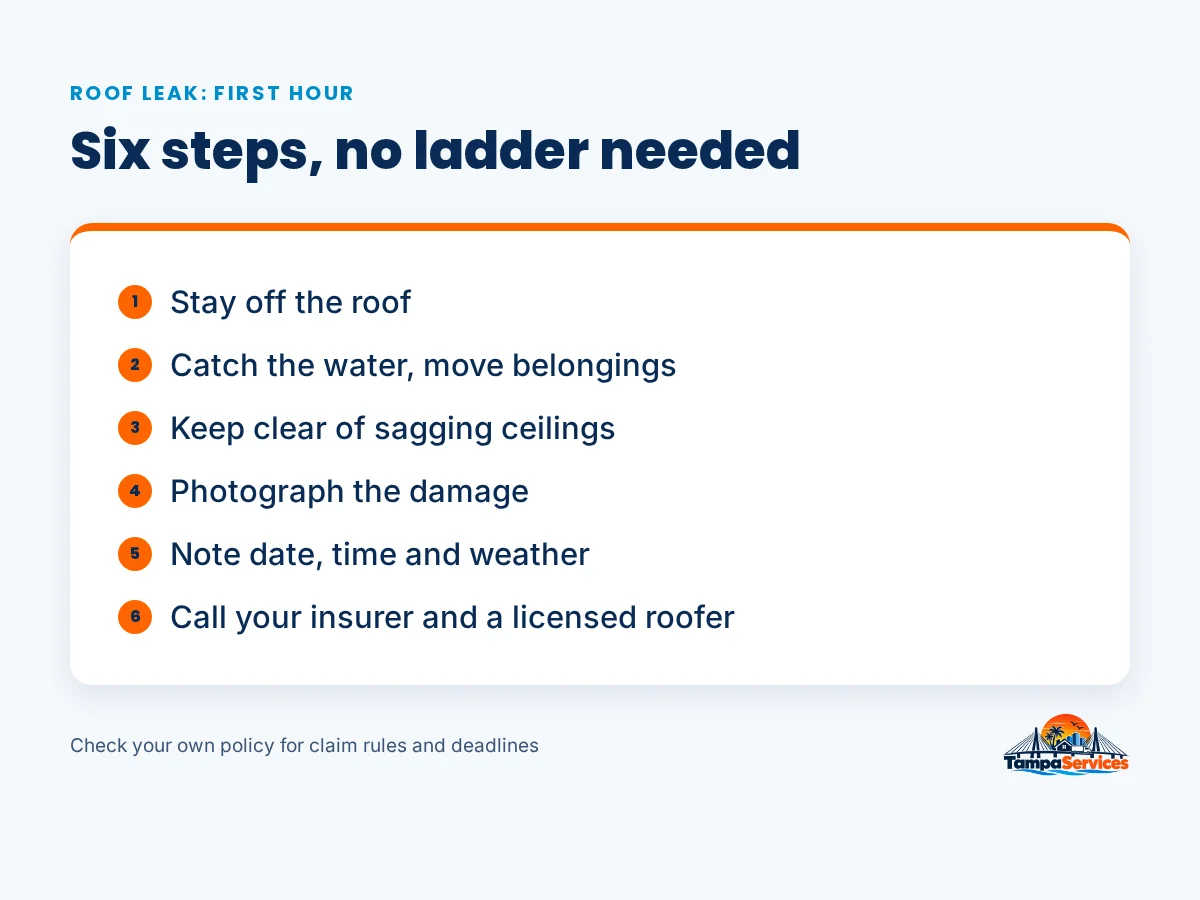
When water comes through a ceiling, the first job is limiting the damage from inside the house. Move people and belongings away from the drip, catch water with a bucket, and keep everyone out from under a ceiling that is bulging or sagging. The second job is a record: photos and notes. The third is calling a licensed roofer and, if the damage may be covered, your insurance company.
What you should not do is climb onto the roof. Wet shingles and tile are slick, Tampa afternoon storms arrive fast, and a fall is a far bigger problem than a stained ceiling. Roof leaks are also hard to trace: water often travels along the decking or a rafter and drips several feet from where it got in, so the stain is rarely a reliable map of the hole.
What to do inside the house right now
Put a bucket or trash can under the drip and a towel around it so it doesn't splash. Move furniture, rugs and electronics out of the area. If water is pooling in a ceiling light fixture or near outlets, don't touch the fixture. If you can reach your breaker panel safely and dry, turn off the circuit for that room, and call an electrician if the wiring got wet.
A ceiling that is bulging, sagging or dripping heavily holds a lot of water and can let go without warning. Keep people and pets out of that room until a professional looks at it. For smaller drips, check the attic if you can do so safely from the access hatch, without stepping off the framing: a flashlight may show wet insulation or a dark stain on the decking that tells the roofer where to start.
Document the leak before anything gets cleaned up
Take clear photos and a short video of the stain, the drip and any damage to floors or belongings, with a wide shot and a close-up of each. Write down the date, the time, the weather, and how long the water has been coming in. If you can photograph the roof safely from the ground, do that too, from a few angles, and note any missing shingles or tiles, a blue tarp that has shifted, or branches on the roof.
Keep receipts for any emergency supplies or temporary repairs. This record helps a roofer understand the problem, and it helps with an insurance claim if the damage turns out to be covered.
Should you tarp the roof yourself?
A tarp is a temporary measure, and putting one up means working on a steep, wet surface. We don't recommend homeowners do this themselves. Many Tampa roofers and emergency service companies install temporary protection as part of a repair visit. Ask whether it's included, and get any temporary repair described in writing, with the price, before work starts.
Insurance policies commonly expect you to take reasonable steps to prevent further damage once a loss happens. Check your own policy's wording, and ask your insurer what they want to see before you spend money on temporary repairs.
Does a Tampa roof leak need a repair, an inspection or a replacement?
It depends on the cause. A single leak around a vent pipe, a pipe boot, a skylight or a chimney is often a localized flashing or sealant repair. A leak after a storm may come from missing or lifted shingles or tiles. Leaks in several rooms, widespread granule loss or soft, spongy decking point to a bigger conversation about replacement, and only an in-person assessment can tell you which one you have.
A good roofer finds the source before quoting. Be cautious of anyone who quotes a full replacement over the phone without seeing the roof, or who pushes you to sign the same day.
Report the damage to your insurer promptly
If the leak followed a storm or other sudden event, call your insurer early. Florida law sets deadlines for giving notice of a property insurance claim: generally within one year of the date of loss for an initial or reopened claim, and within 18 months for a supplemental claim. Don't wait until the deadline; late reporting makes it harder to document what happened, and ongoing leaks can make damage worse.
A leak from wear, age or poor maintenance is often treated differently from storm damage, so don't assume what is or isn't covered. Ask your insurer, and read the policy. The Florida CFO's consumer resources explain the claim process. Keep every document and claim number together.
- Florida Statutes 627.70132 (notice of property insurance claim)
- Florida CFO storm and insurance resources
How to choose the roofer who comes out
Leaks bring out door knockers and flyers, so slow down for a moment. Ask for the Florida license number and check it on the DBPR license search. Get a current insurance certificate from the roofer's agent. Ask who pulls the permit if the work requires one, and ask for a written scope that names the repair, the materials and the warranty. Florida law bars roofers from offering gifts, cash or a waived deductible in exchange for an inspection or claim, and you shouldn't sign over your insurance benefits to a contractor.
Our full hiring checklist walks through each of these checks step by step.
- Florida DBPR license search
- Florida Statutes 489.147 (prohibited roofing solicitation practices)
- How to choose a Tampa roofer
If the leaking roof belongs to a Tampa business
Flat and low-slope commercial roofs tend to leak at drains, seams and rooftop equipment curbs, and the water may travel a long way inside a ceiling grid. Photograph affected areas, protect inventory and equipment, and tell your landlord or property manager right away if you lease, since your lease decides who is responsible for the roof. Keep a log of when water appears and how hard it rained; that history helps a commercial roofer find the source faster.
What to have ready when you request a roofer
Your ZIP code, whether it's a home or a business, the roof type and rough age, where the water shows up, when it started, a few photos, and whether you've contacted your insurer. That is what a roofer needs to decide how to assess the leak.
Tampa Services is a marketplace, not a roofing contractor. When you submit a request, we match it with one eligible local provider for your service and ZIP code, and that provider contacts you to schedule an assessment. You aren't obligated to hire, and you should still check the license, insurance and written scope before you sign.
Frequently asked questions
What should I do first when my roof leaks in Tampa?
Protect people and belongings: catch the water, move items away and stay out from under a sagging ceiling. Photograph the damage, then call a licensed roofer and your insurer. Don't climb onto the roof.
Can I fix a roof leak myself?
We don't recommend it. Wet roofs are slippery and falls are serious, and the visible stain often isn't where the water gets in. A licensed roofer can find the source and repair it safely.
Does homeowners insurance cover a roof leak in Florida?
It depends on the cause and your policy. Sudden storm damage is often treated differently from wear and age. Ask your insurer and report the damage promptly; Florida sets deadlines for giving notice of a claim.
Does a roof repair in Tampa need a permit?
Some roof repairs do and some don't, depending on the scope. Confirm with the City of Tampa Construction Services or your county building office, and ask the roofer who pulls any required permit.
Does Tampa Services repair roofs?
No. Tampa Services matches your request with one eligible local provider, who assesses the roof, quotes the work and performs it under their own license.
Related services
Keep reading
- Roof repair in Tampa
- Roof inspections in Tampa
- Hurricane roof damage help
- Commercial roofing in Tampa
- How to choose a Tampa roofer
- How to compare contractor estimates