How to Choose a Tampa Roofer: A Practical Hiring Guide

By Aaron Hurlburt · Last reviewed 2026-11-03
Hiring a Tampa roofer? Check the license, insurance, permit, written scope, deposit terms and warranty first. A practical guide for homes and businesses.
Start with what the roof actually needs
Choosing a roofer in Tampa is easier once you know which kind of job you have. A localized leak after an afternoon storm may call for a repair, but only an inspection shows whether the damage is isolated. A shingle roof near the end of its life, widespread granule loss, or soft decking points toward a replacement conversation. Buying, selling or renewing insurance often starts with an inspection. The right contractor for each is the same kind of company, but the questions you ask are different.
Before you call anyone, write down what you've seen: where the stain or leak shows up, how old the roof is if you know, the roof type (shingle, tile, metal or flat), and whether anything changed after a storm. Take a few photos from the ground and of any ceiling stains. Don't climb onto the roof yourself; wet tile and shingles are slippery, and Tampa summer heat makes roof work dangerous for anyone without the right equipment.
1. Confirm a Florida roofing license that matches the company
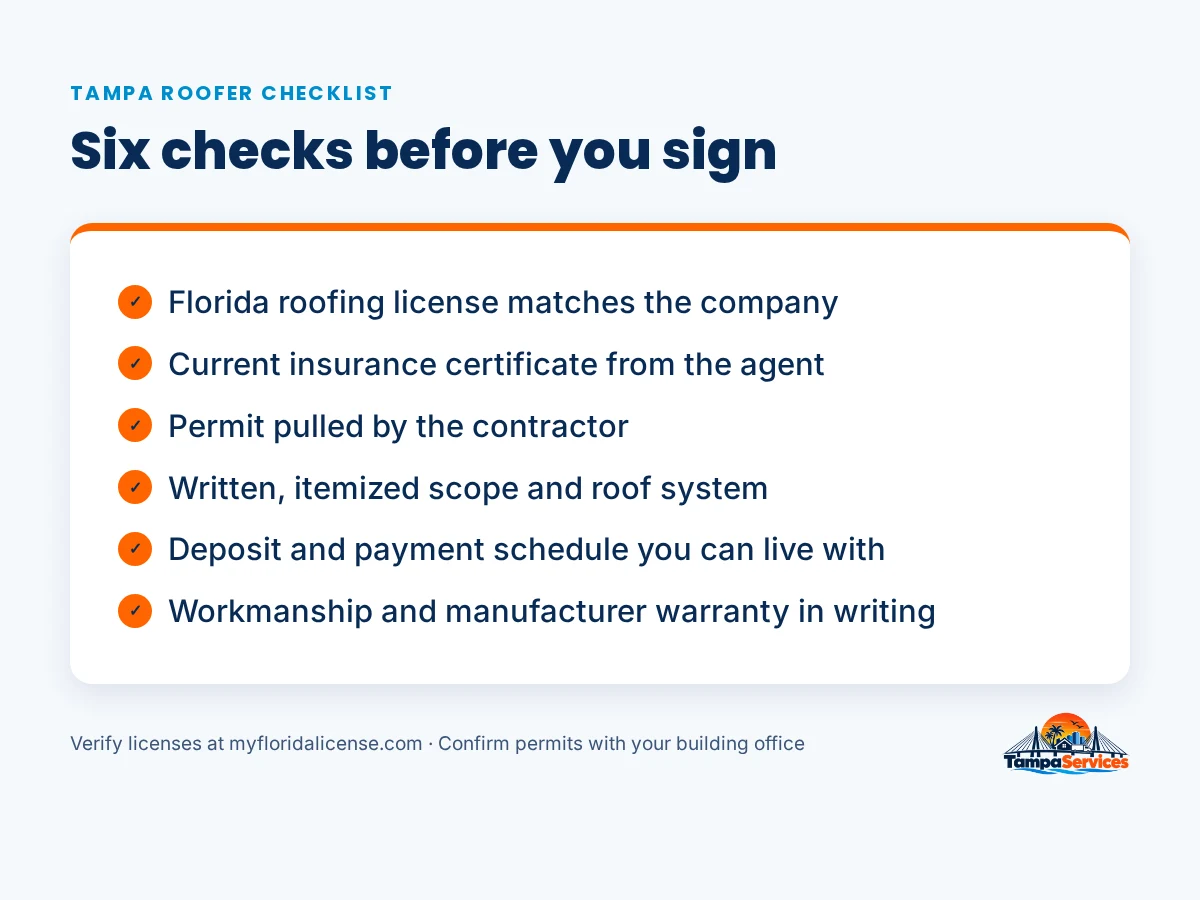
Florida defines a roofing contractor in state law and requires a state license for roofing work. Ask for the license number in writing; it should also appear on the estimate and contract. Then look it up on the DBPR license search by number or name.
Check that the license is current and active, that it's a roofing license or a contractor license that covers the work, and that the business name on the license matches the company on your contract. A licensed qualifier can hold the license for a company, which is normal, but the company you sign with should be tied to it.
2. Get a current insurance certificate from the agent
Roofing carries real injury and property-damage risk, so ask for a certificate of insurance sent directly from the contractor's insurance agent. Read the policy dates, the general liability limits and the named insured. Ask how workers' compensation is handled for the crew that will be on your roof.
When you request a provider through Tampa Services, license and insurance information is on file for providers who join. Coverage can change, so verify current status before you hire.
3. Ask who pulls the permit, and check it yourself
Re-roofs and many roof repairs in Tampa require a building permit. Inside city limits, permits and inspections run through the City of Tampa's Construction Services; unincorporated Hillsborough County has its own office. In Florida the licensed contractor normally pulls the permit, which ties the job to their license.
Be cautious if a roofer asks you to pull an owner-builder permit for work they're doing, because that can shift legal responsibility to you. Once the permit is issued you can usually look it up by address and, later, confirm it passed final inspection. Rules vary, so confirm locally if anyone tells you a permit isn't needed.
4. Insist on a written, itemized scope
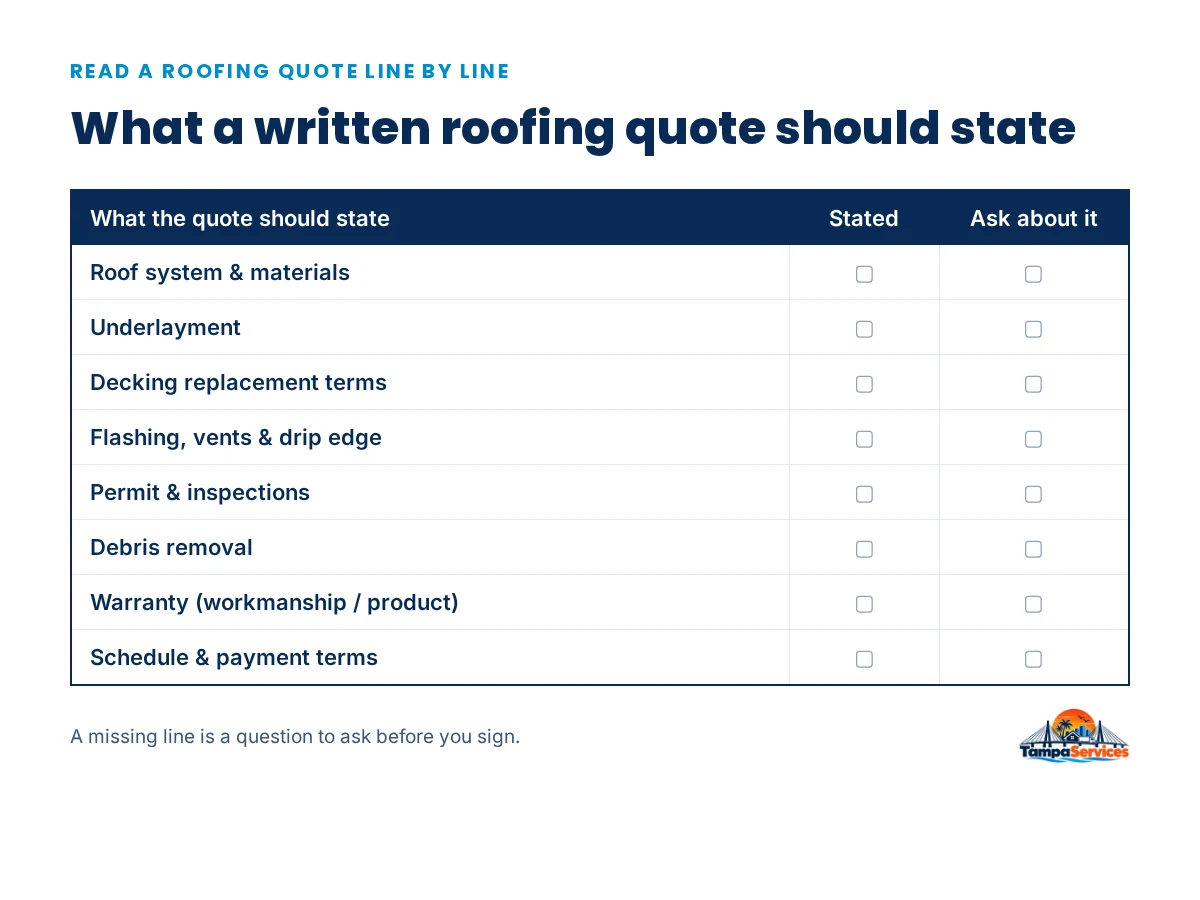
A good roofing quote describes the roof system, not just a total. It should name the roof covering and manufacturer, the underlayment, how damaged decking will be handled and priced, flashing, vents and drip edge, permit and inspection responsibility, cleanup and debris removal, the schedule, and the warranty.
Florida's wind and code requirements make product approvals and attachment methods important on Tampa homes, so it's reasonable to ask which approved products will be installed. Vague lines like "repair roof as needed" leave too much room for disagreement later.
5. Understand deposits, payments and lien releases
Florida law sets rules when a contractor takes more than 10 percent of the contract price up front on a residential job: they generally must apply for permits within 30 days and start work within 90 days after permits are issued, unless you agree otherwise in writing. Ask how your deposit will be used and when work is expected to begin.
Tie later payments to completed milestones. Suppliers and subcontractors may send you a Notice to Owner; that's normal on Florida projects. Before the final payment, ask for lien releases so you aren't asked to pay twice for the same materials or labor.
- Florida Statutes 489.126 (deposits over 10%)
- Florida Statutes 713.06 (notices to owner and lien releases)
6. Get the warranty in writing, both kinds
Roofs usually come with two different warranties: the manufacturer's product warranty and the contractor's workmanship warranty. Ask what each covers, how long it lasts, whether registration is required, and who you call if a leak shows up next rainy season. Keep the paperwork with your permit record and final invoice.
Storm season red flags specific to Florida roofing
After a storm, door knockers and flyers show up fast in Tampa neighborhoods. Florida law prohibits contractors from offering gifts, cash, or a waived insurance deductible in exchange for a roof inspection or for filing a roof claim, and restricts advertising that pushes owners toward roof claims without required disclosures. A contractor also may not interpret your policy or adjust your claim unless they hold a public adjuster license.
Since 2023, Florida property insurance policies issued or renewed generally can't be assigned to a contractor through an assignment of benefits. If anyone asks you to sign over your claim, stop and call your insurer first. Pressure to sign today, cash-only pricing and a license that doesn't match the company are all reasons to slow down.
- Florida Statutes 489.147 (prohibited roofing solicitation practices)
- Florida CFO storm and insurance resources
Hiring a roofer for a Tampa business or commercial property
Business owners and property managers go through the same checks, with a few additions. For a flat or low-slope commercial roof, ask about experience with the specific system you have, such as modified bitumen, TPO or a roof coating. Ask for an insurance certificate that lists your business or landlord as certificate holder, and confirm how the crew will handle access, tenant notices and work hours so operations keep running.
If you lease, check your lease for who is responsible for the roof before you request work. For flat-roof leaks, document where water appears and when it rained; that history helps the provider find the source faster.
What to have ready before you request a roofer
Your ZIP code, the property type (home or business), the roof type and approximate age, what you've noticed and when, a few photos, your timeline, and whether an insurance claim is involved. That's the information a roofer needs to decide how to assess your roof, and it makes your request easier to match.
Tampa Services is a marketplace, not a roofing contractor. When you submit a request, we match it with one eligible local provider for your service and ZIP code, and that provider contacts you to schedule an assessment. You're never obligated to hire, and you should still run the checks above before signing anything.
- Roof repair in Tampa
- Roof replacement in Tampa
- Roof inspections in Tampa
- Request a Home Service Quote
- Request a Business Service Quote
Frequently asked questions
Do roofers in Tampa need a state license?
Florida requires a state contractor license for roofing work. Look up the license number on the DBPR license search and make sure the name matches the company on your contract.
Does a roof replacement in Tampa need a permit?
Re-roofs generally require a permit. Inside city limits, the City of Tampa's Construction Services handles permits and inspections. The licensed contractor normally pulls it; confirm with your building office if you're told otherwise.
Can a roofer offer me a gift or pay my deductible to inspect my roof?
No. Florida law prohibits contractors from offering gifts, cash, or a waived deductible in exchange for a roof inspection or for making a roof insurance claim.
How much deposit should a Tampa roofer ask for?
There's no single required amount, but if a contractor takes more than 10 percent up front on a residential job, Florida law sets deadlines to apply for permits and start work. Tie remaining payments to completed milestones.
Does Tampa Services do the roofing work?
No. Tampa Services connects Tampa home and business owners with one matched local provider. The provider assesses the roof, quotes the work and performs it under their own license.
Related services
Keep reading
- Roof replacement in Tampa
- Roof repair in Tampa
- Roof inspections in Tampa
- Hurricane roof damage help
- How to compare contractor estimates
- How to verify a Florida contractor license
Sources and official resources
- Florida DBPR license search
- Florida Statutes 489.105 (contractor definitions, including roofing contractor)
- Florida Statutes 489.126 (deposits over 10%)
- Florida Statutes 489.147 (prohibited roofing solicitation practices)
- Florida Statutes 713.06 (notices to owner and lien releases)
- City of Tampa Construction Services (permits and inspections)
- Florida Building Commission (product approvals and code)
- Florida CFO storm and insurance resources