Roof Inspections for Tampa Insurance and Home Sales

By Aaron Hurlburt · Last reviewed 2026-11-13
When a Tampa homeowner needs a roof inspection for insurance or a home sale, what a good report covers, and how to hire the right licensed inspector.
The short answer: ask the insurer or buyer what report they accept first
Insurance companies and buyers each set their own requirements, so the most useful first step is a quick call to your insurance agent or your real estate agent. Ask which kind of roof report is needed, how recent it must be and whether it has to come from a licensed professional. Then order the inspection that matches, instead of paying for a report that is not accepted.
Tampa Services is a marketplace, not a roofing company. If you request an inspection, we match you with one eligible local provider, who works under their own license. We cannot promise a response time or a particular result.
When do Tampa homeowners need a roof inspection for insurance?
Common moments are a new policy, a renewal where the insurer asks about roof condition, after a storm, or when an older roof is nearing the end of its life. Insurers decide for themselves how much they care about roof age and condition, and requirements differ between companies. If an insurer asks for something specific, get the request in writing.
What is a wind mitigation inspection, and can it lower my premium?
A wind mitigation inspection documents features that help a home resist wind, such as how the roof is attached to the walls, the roof deck attachment and the shape of the roof. Florida law directs insurers to include discounts, credits or other rate differentials for fixtures and construction techniques shown to reduce windstorm losses. How much you save depends on your insurer and your home, so ask your agent how they use the report and do not count on a particular discount.
Selling a Tampa home: should the roof be inspected before listing?
Many buyers order their own inspection, and the roof is a frequent topic. An inspection before you list lets you see problems first, decide what to repair and avoid surprises during the contract period. It is a choice, not a requirement. Keep the written report and any repair invoices together so you can share them with your real estate agent.
What should a good inspection report include?
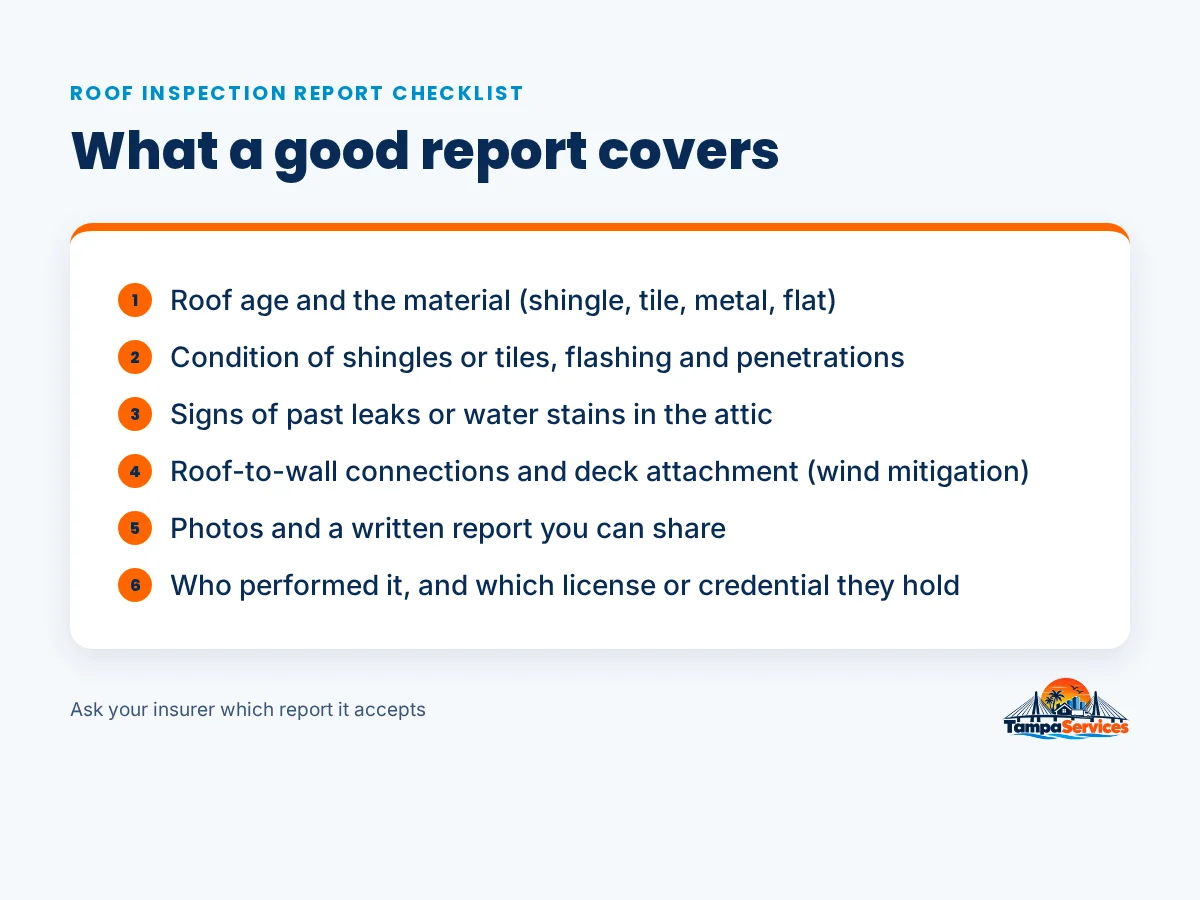
Look for the roof material and approximate age, the condition of shingles or tiles, flashing and roof penetrations, any signs of past or active leaks, notes on the attic if it is accessible, clear dated photos and a written summary that names the inspector and their license or credential. Ask the inspector to separate urgent repairs from items to monitor, and to explain what was not inspected.
Who should do the inspection, and how do I check?
If the inspector also offers repairs, remember the conflict: a free inspection can turn into a sales pitch. Ask for the inspection report on its own, and get a second written opinion before agreeing to a major replacement. If a roofing contractor performs the work, confirm that their license is active on DBPR. Florida Statutes 489.105 defines roofing contractors.
Never climb onto a roof yourself to check; falls are a real danger, and a professional can document the roof safely.
Small commercial building owners
Owners of small retail, office or warehouse buildings are often asked for roof condition reports by insurers or lenders too. The same questions apply: ask who needs the report, what it must cover and who may perform it. Flat and low-slope roofs have different failure signs than shingle roofs.
Frequently asked questions
Do I need a roof inspection for home insurance in Tampa?
It depends on your insurer. Companies set their own requirements, so ask your agent which report they accept and how recent it must be.
What is a wind mitigation inspection?
It documents roof and wall features that help a home resist wind. Florida law directs insurers to offer discounts or credits for proven mitigation features; the amount varies by insurer.
Should I inspect my roof before selling my Tampa house?
It is optional. An inspection lets you see and plan for problems before buyers do. Keep the report and any repair records.
Does Tampa Services inspect roofs?
No. Tampa Services matches your request with one eligible local provider, who works under their own license.