Water Heater Repair or Replace? A Tampa Guide

By Aaron Hurlburt · Last reviewed 2026-11-07
No hot water in Tampa? Learn the safe first checks, the signs that point to repair or replacement, and what to ask a licensed plumber before you approve work.
The short answer: check safely, then compare repair and replacement in writing
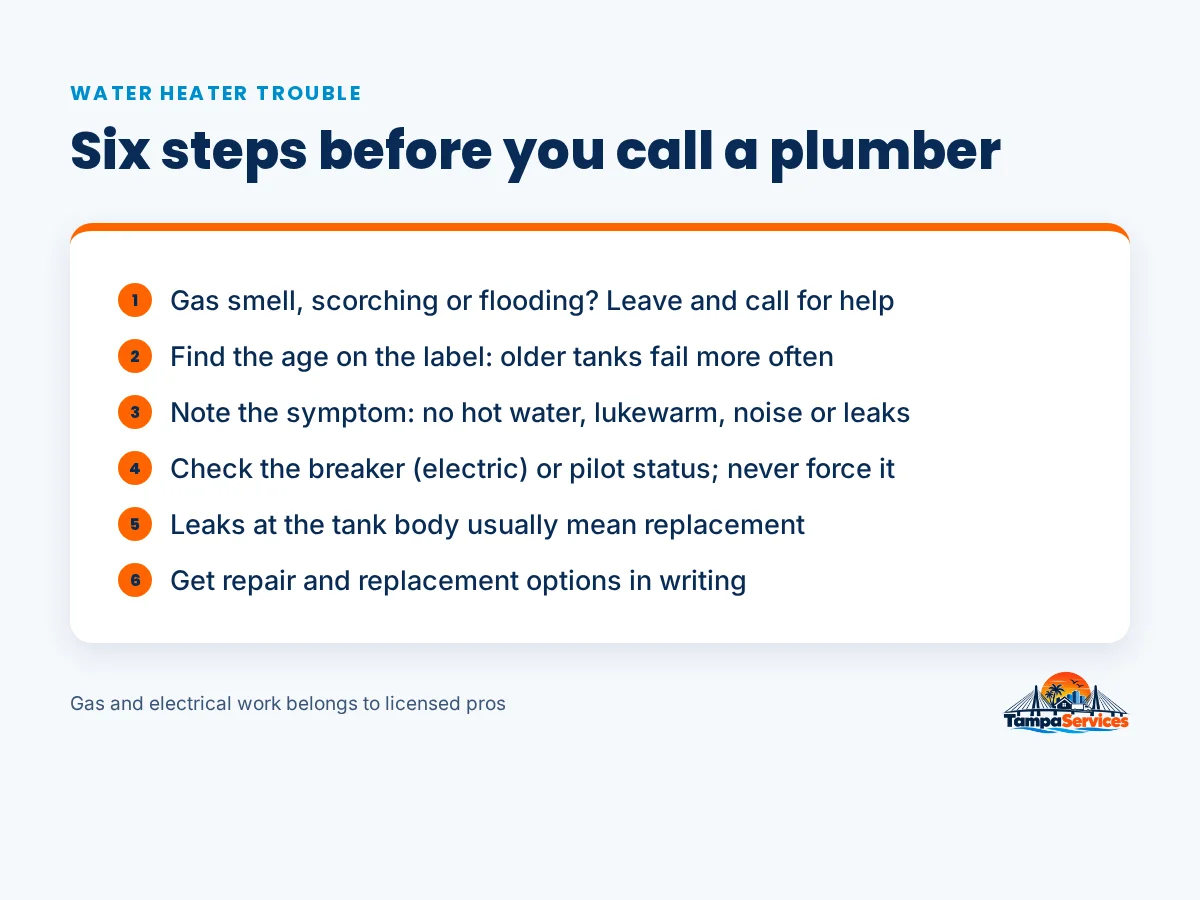
A water heater that stops making hot water is usually a repair when one part has failed, such as a thermostat, heating element or igniter. It is usually a replacement when the tank itself is leaking, the unit is old and failing repeatedly, or repairs would cost a large share of a new unit. The label on the heater shows its age. A plumber should explain what failed and give you both options so you can compare.
Water heaters combine water, electricity or gas, and heat. Treat anything beyond a quick look as professional work. For the service itself, see our water heater installation and repair page.
Safety first: when to stop and get help
If you smell gas, leave the house and call your gas utility or 911 from outside. Do not flip switches or light anything. If you see scorch marks, smell burning, or find water pooling around the heater, shut off the power at the breaker if you can reach it safely and call a licensed plumber. Never block or cap the temperature and pressure relief valve or its drain pipe; it is a safety device.
What the symptom may mean
No hot water at all in an electric heater often points to a tripped breaker, a failed heating element or a bad thermostat. Check the breaker first. In a gas heater, a pilot or igniter problem is common, but follow the manufacturer's label and do not force anything. Lukewarm water, running out quickly, rumbling or popping noises, and rusty or cloudy hot water can come from sediment, a failing element or an aging tank.
Water around the base needs a careful look. A loose fitting or a leaking valve can be repaired. Water seeping from the tank body itself usually means the tank has failed and replacement is the realistic option.
Repair or replace: how to decide
Ask four things. How old is the heater? What exactly failed? Is this the first repair or the third? And what does each option include in writing? A relatively new heater with one failed part is a good repair candidate. An older heater with a leaking tank, or repeated repairs, usually points to replacement. Also ask whether a different type of unit fits your space and fuel, and whether the work needs a permit; confirm that with City of Tampa Construction Services or your county building office.
Questions to ask before you hire
In Florida, plumbing contracting requires a state license. Ask for the license number, check it on the Florida DBPR license search, and ask for proof of insurance. Ask what failed, whether the quote covers parts, labor, disposal of the old unit and any permit, what the warranty covers, and how long it lasts. Be cautious of anyone who insists on replacement without explaining the cause, or who wants a large payment up front.
What to have ready when you request a provider
Your ZIP code, the heater's age and brand from the label, gas or electric, the symptom, whether anything is leaking, and a photo of the label. Tampa Services is a marketplace, not a plumbing company. We match your request with one eligible local provider for your service and ZIP code, who contacts you. You are not obligated to hire, and you should still check license, insurance and the written scope before you sign.
Frequently asked questions
Should I repair or replace my water heater?
A newer heater with one failed part is often repaired. A leaking tank, an older unit or repeated repairs usually point to replacement. Ask for both options in writing.
Why do I have no hot water?
In an electric heater, check the breaker first; a failed element or thermostat is also common. In a gas heater, the pilot or igniter may be the cause. If anything seems unsafe, call a licensed plumber.
What if I smell gas near my water heater?
Leave the house, avoid switches and flames, and call your gas utility or 911 from outside.
Does a water heater replacement need a permit in Tampa?
It can. Ask the contractor and confirm with City of Tampa Construction Services or your county building office.
Does Tampa Services repair water heaters?
No. Tampa Services matches your request with one eligible local provider, who inspects the unit, quotes the work and performs it under their own license.
Related services
Keep reading
- Water heater installation and repair
- How to compare contractor estimates
- How to verify a Florida contractor license