Mold After a Storm: When to Call a Pro in Humid Tampa Bay
By Aaron Hurlburt · Last reviewed 2026-10-17
Mold can start within a day or two after a leak or flood. What you can safely clean yourself, when it's time to call a licensed mold professional in Florida, and how to keep it from coming back.
Why mold shows up so fast here
Tampa Bay's humidity gives mold a head start. After a roof leak, a burst pipe or storm flooding, the EPA says water-damaged areas and items should be dried within 24 to 48 hours to prevent mold growth. In a humid Florida fall, with AC off during an outage, that window can close quickly.
Late in hurricane season, many homeowners are also finding mold from earlier storms: behind baseboards, under sinks, in closets on exterior walls or above a ceiling stain that never fully dried. Here's how to think about what you can handle and when to call someone.
Dry first, then clean
Mold needs moisture, so cleaning it without fixing the water problem won't last. Stop the source, then dry the area with fans, dehumidifiers and AC once power is back. Pull out soaked carpet pad, insulation and drywall that can't dry quickly. Photograph everything before you throw it out, for your insurance claim.
If you were flooded, treat floodwater as contaminated. The EPA's flooded homes page covers safe cleanup, protective gear and what to discard.
What you can clean yourself
According to the EPA, if the moldy area is less than about 10 square feet, roughly a 3-foot by 3-foot patch, you can usually handle it yourself. Wear gloves, goggles and an N-95 respirator, scrub hard surfaces with detergent and water, and dry them completely. Porous materials like ceiling tiles or carpet that are moldy may need to be thrown away.
Don't paint over mold. It will grow back through the paint if the surface is still damp.
When to call a pro
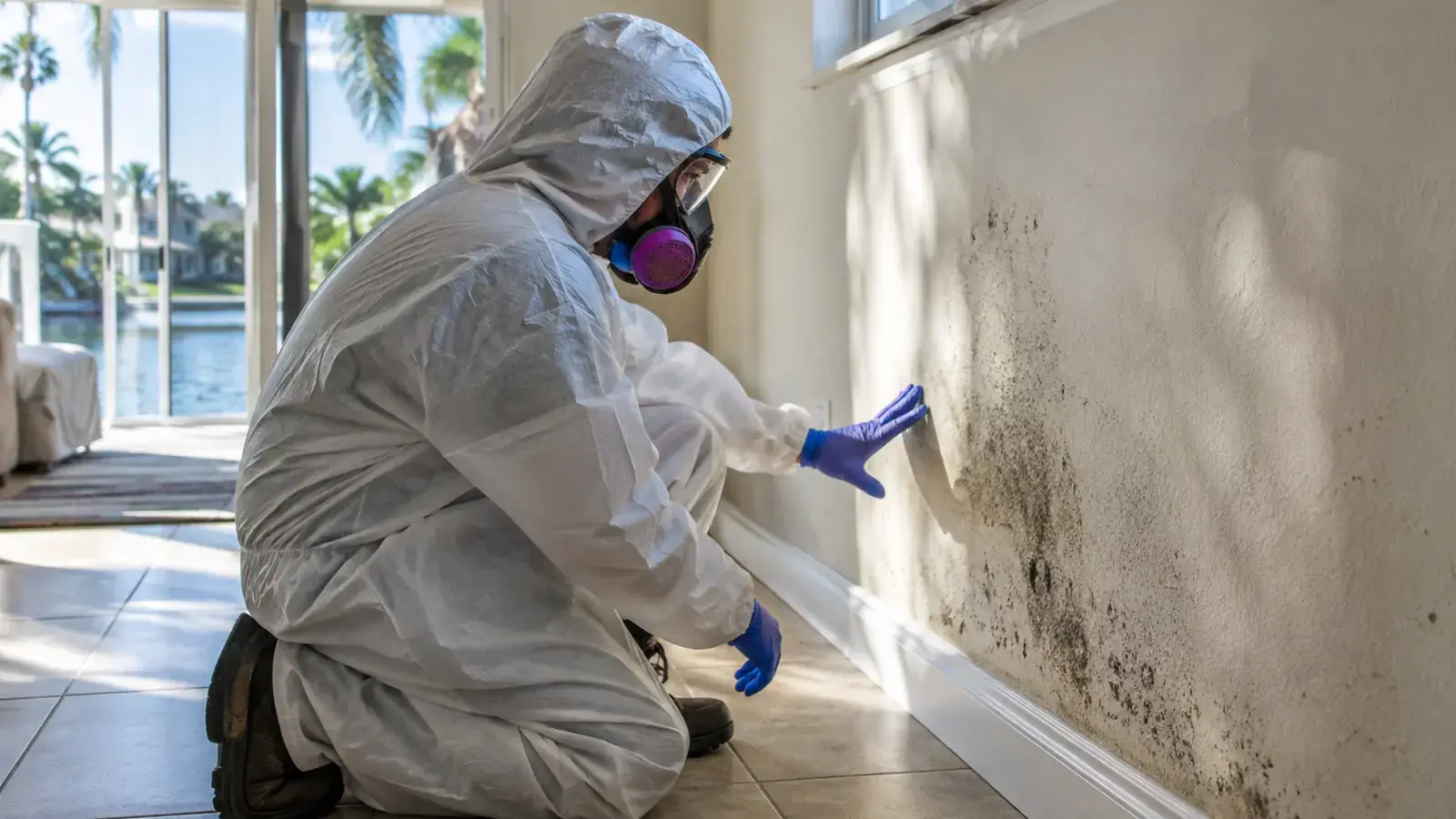
Call a professional if the mold covers more than about 10 square feet, if there's been a lot of water damage, if mold is in your AC system or ductwork, if you smell mold but can't find it, or if anyone in the home has asthma, allergies or a weakened immune system. Sewage or floodwater contamination is also a job for professionals.
In Florida, the DBPR licenses mold assessors and mold remediators. An assessor inspects and can write a plan; a remediator does the removal. Check the license before you hire, and ask how they'll contain the area, what they'll remove and how they'll confirm the job is done.
Insurance and documentation
Mold coverage varies a lot between policies, and many limit it. Report water damage to your insurer promptly, keep photos, receipts and moisture readings, and ask what your policy covers before remediation starts if you can. Florida's Department of Financial Services has storm and insurance resources if you run into trouble with a claim.
Keeping it from coming back
Keep indoor humidity low. The EPA suggests keeping it below 60 percent, ideally between 30 and 50 percent. Run your AC, fix leaks quickly, clean AC drain lines, vent bathrooms and dryers outside, and check under sinks and around windows after heavy rain. If you're away for part of the year, don't turn the AC off entirely.
Frequently asked questions
How fast can mold grow after water damage?
The EPA says to dry water-damaged areas and items within 24 to 48 hours to prevent mold growth.
Can I clean mold myself?
The EPA says you can usually handle an area smaller than about 10 square feet yourself with proper protection. Larger areas, contaminated water or mold in HVAC systems call for a professional.
Are mold remediators licensed in Florida?
Yes. The Florida DBPR licenses mold assessors and mold remediators. Look up the license before you hire.