Carpet Installation in Tampa Bay
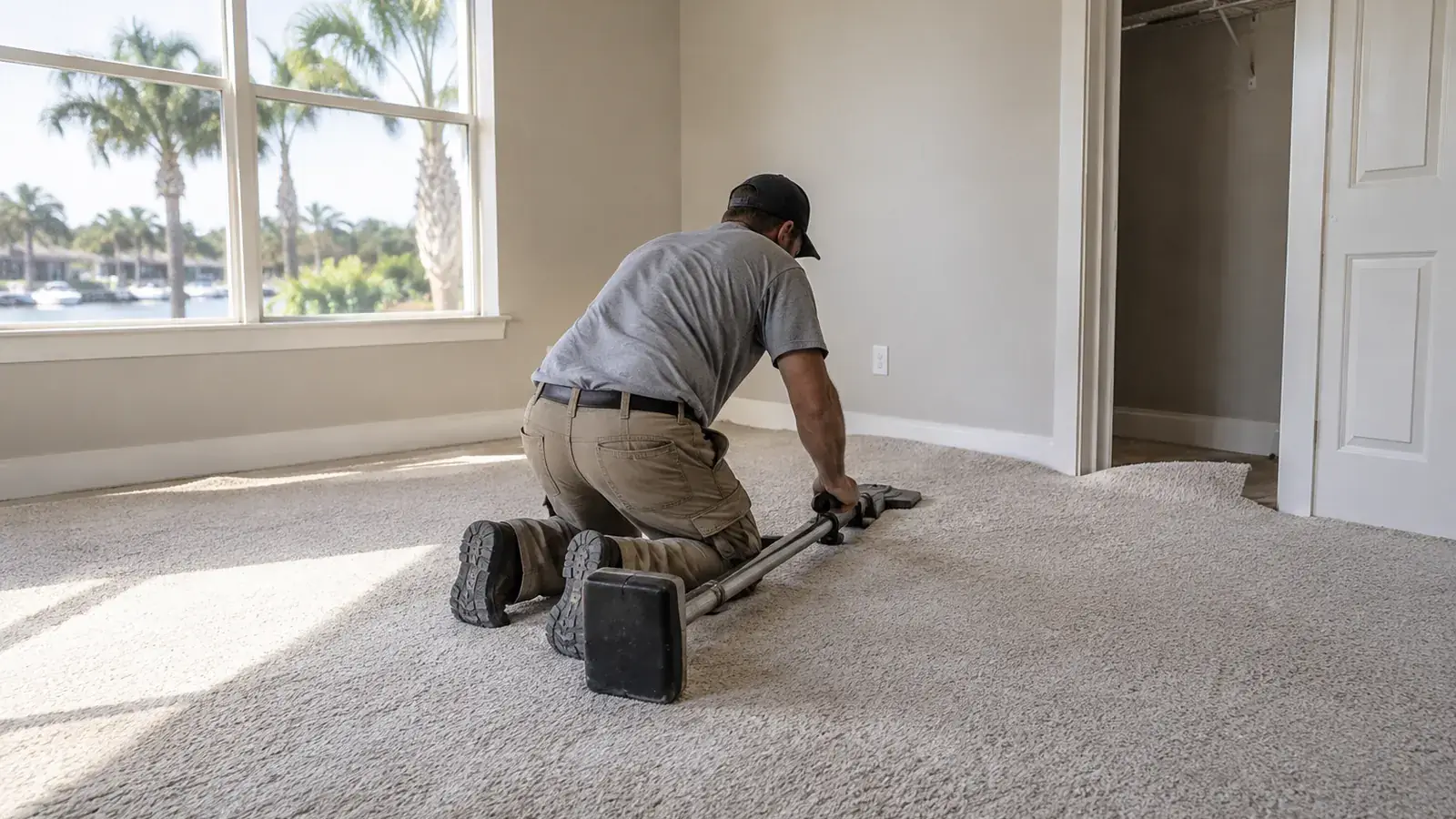
New carpet and pad for bedrooms, stairs and living areas. Tell us about the job and we'll match you with a local provider who covers your ZIP code.
Good to know
- Florida slabs hold moisture; ask how the installer tests and handles it.
- Condos often require sound-rated underlayment; check your association rules.
- Order about 10% extra material for cuts and future repairs.
Questions to ask before you hire
- Will you send a current certificate of insurance before work starts?
- Is removal of old flooring and baseboards included?
- How do you check the slab for moisture?
What carpet installation usually costs in Tampa Bay
Carpet is priced by the square yard of carpet and pad plus installation. Stairs, removing old flooring, moving furniture, and transitions to tile or wood are often extra line items.
Pad quality affects comfort and how long the carpet lasts. Some carpet warranties require a specific pad, so ask before you choose a cheaper one.
Carpet comes in fixed roll widths, so rooms are measured to minimize seams, and some waste is normal. Ask to see the seam plan.
Permits in Florida
Carpet installation doesn't need a permit. Condos may require certain underlayment for sound. Check your association rules.
Permit rules depend on your address: each city permits inside its limits and the county covers unincorporated areas. Ask your provider who pulls the permit and confirm with the local building office before work starts.
Hurricane season planning
Carpet soaked by floodwater usually can't be saved, and wet pad holds moisture. In the wet season, keep indoor humidity under control to avoid musty smells. Dry season is easier for removing old carpet and airing out rooms.
Atlantic hurricane season runs June 1 through November 30. Contractor schedules tighten before and after named storms, so plan non-urgent work early.
Planning around Tampa Bay's wet and dry seasons
Tampa Bay really has two working seasons. The dry season, roughly November through May, brings lower humidity and fewer afternoon storms, so it's usually the easiest time to schedule carpet installation, inspections and anything that needs paint, sealant or concrete to cure. The wet season, roughly June through September, brings daily thunderstorms, lightning and heavy humidity that can push outdoor work to the morning and stretch schedules. If your carpet installation project isn't urgent, asking for dates early in the dry season usually gives you more choice.
Getting a useful quote
Before a provider visits, jot down what you've noticed, when it started, and any past repairs. Photos help. Know your ZIP code, property type and rough age of the home or building, and whether an HOA, landlord or insurer needs to be involved.
When quotes come in, compare the same scope, materials, warranty and timeline side by side. Our free Compare My Quotes tool can help.
How to hire for carpet installation
Ask for the contractor's license number and look it up on the state DBPR site. Check that the name matches the company, the license is active, and the license type fits the job. Some trades are licensed locally by the county instead.
Ask for a current certificate of insurance. Through Tampa Services, license and insurance information is on file for providers; verify current status before hiring.
Get the scope, price, schedule, payment terms and warranty in writing. Be careful with large deposits for work that hasn't started, and with anyone who asks you to sign over insurance benefits.
Compare at least the same scope when you look at prices. The lowest number isn't always the same job.
Frequently asked questions
Why is the quote higher than the carpet price?
Pad, labor, removal, stairs and waste all add to the total. Ask for line items.
Can carpet go on a concrete slab?
Yes, with the right pad. Ask about moisture testing.
How long does install take?
Many homes are done in a day. Stairs and furniture moves add time.
Will I see seams?
Some seams are unavoidable. Ask where they'll fall.
How it works
- Tell us about the job and your ZIP code.
- We match it with one local provider who covers your area and does this work.
- Your provider contacts you, and you track everything in your portal.