Network & Low Voltage Cabling in Tampa Bay
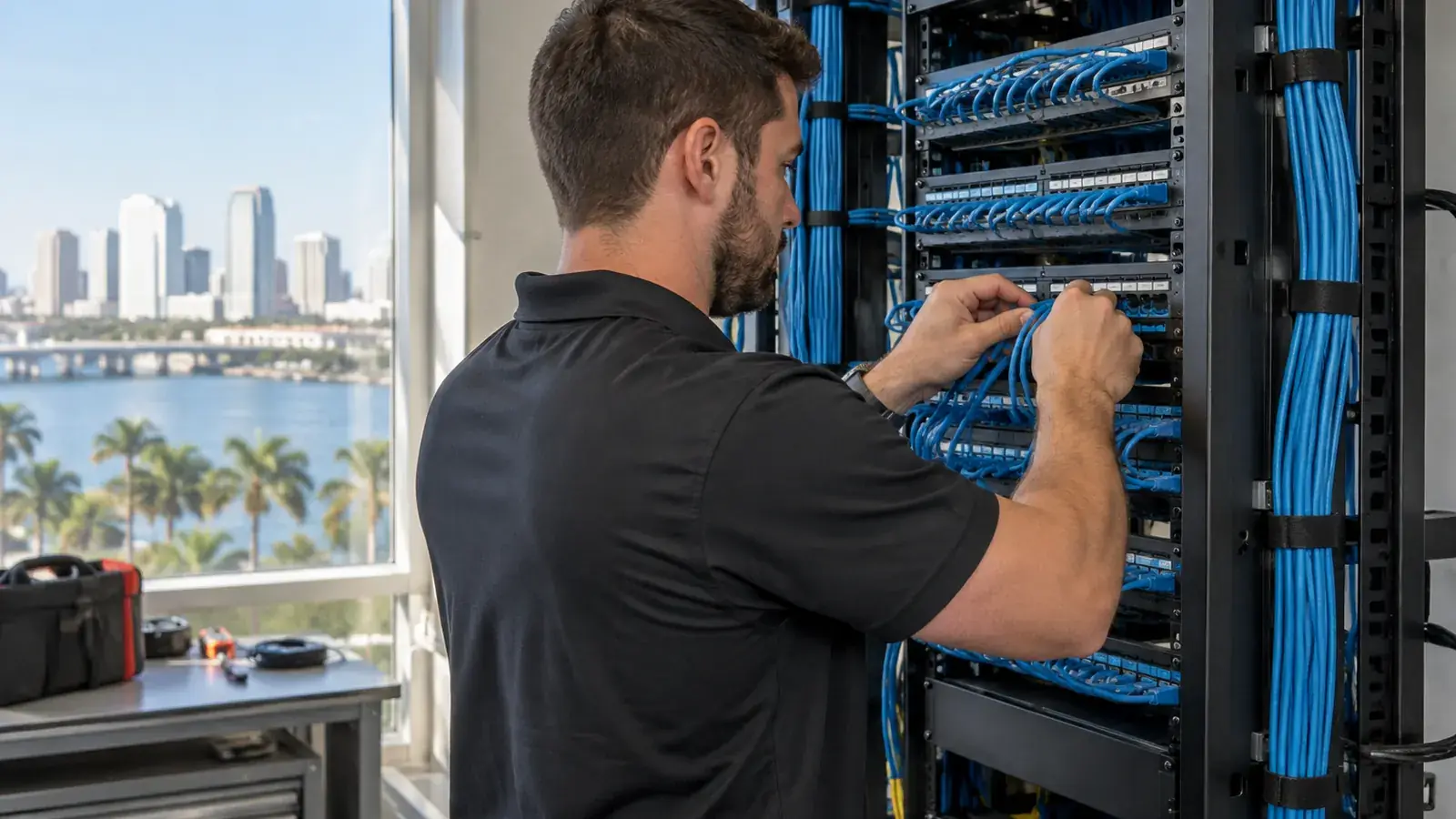
Data cabling, Wi-Fi, access points and rack cleanup. Tell us about the job and we'll match you with a local provider who covers your ZIP code.
Request a Business Service Quote
Good to know
- Label every cable run; it saves hours later.
- Ask for a network diagram when the job is done.
- Separate guest Wi-Fi from business systems.
Questions to ask before you hire
- Will you send a current certificate of insurance before work starts?
- Will you provide a network diagram and labeling?
- What's your support response time?
What network & low voltage cabling usually costs in Tampa Bay
Network and low-voltage cabling is priced by the number of drops (each cable run to a jack, camera or access point), cable category, run lengths, ceiling type and termination at racks and patch panels. Fiber backbone runs cost more than copper.
Open drop ceilings are quicker to work in than hard lids or exposed block walls. Occupied offices may need after-hours work. Labeling, testing and certification reports are worth paying for.
Ask for the cable type, testing results, labeling scheme and an as-built drawing at the end.
Permits in Florida
Low-voltage work in Florida generally requires a licensed contractor, and new runs in commercial spaces may need a permit and plenum-rated cable where required. Confirm with your building department.
Permit rules depend on your address: each city permits inside its limits and the county covers unincorporated areas. Ask your provider who pulls the permit and confirm with the local building office before work starts.
Hurricane season planning
Protect network racks with surge protection and battery backup, and keep equipment off the floor in flood-prone rooms. Plan cabling during build-outs to avoid reopening ceilings later.
Atlantic hurricane season runs June 1 through November 30. Contractor schedules tighten before and after named storms, so plan non-urgent work early.
Planning around Tampa Bay's wet and dry seasons
Tampa Bay really has two working seasons. The dry season, roughly November through May, brings lower humidity and fewer afternoon storms, so it's usually the easiest time to schedule network & low voltage cabling, inspections and anything that needs paint, sealant or concrete to cure. The wet season, roughly June through September, brings daily thunderstorms, lightning and heavy humidity that can push outdoor work to the morning and stretch schedules, which matters if you're planning around business hours or tenants. If your network & low voltage cabling project isn't urgent, asking for dates early in the dry season usually gives you more choice.
Getting a useful quote
Before a provider visits, jot down what you've noticed, when it started, and any past repairs. Photos help. Know your ZIP code, property type and rough age of the home or building, and whether an HOA, landlord or insurer needs to be involved.
When quotes come in, compare the same scope, materials, warranty and timeline side by side. Our free Compare My Quotes tool can help.
How to hire for network & low voltage cabling
Ask for the contractor's license number and look it up on the state DBPR site. Check that the name matches the company, the license is active, and the license type fits the job. Some trades are licensed locally by the county instead.
Ask for a current certificate of insurance. Through Tampa Services, license and insurance information is on file for providers; verify current status before hiring.
Get the scope, price, schedule, payment terms and warranty in writing. Be careful with large deposits for work that hasn't started, and with anyone who asks you to sign over insurance benefits.
For businesses, also confirm after-hours availability, response times and who your point of contact is.
- Florida DBPR license lookup
- Managed IT vs Break-Fix for Small Tampa Bay Businesses
- How to Verify a Florida Contractor License
Frequently asked questions
Cat6 or Cat6A?
It depends on speeds and distances. Ask your installer.
Do you test each cable?
Ask for certification reports.
Can work be done after hours?
Often.
Do we need plenum cable?
In air-handling spaces, code often requires it.
How it works
- Tell us about the job and your ZIP code.
- We match it with one local provider who covers your area and does this work.
- Your provider contacts you, and you track everything in your portal.