Home Security Systems in Tampa Bay
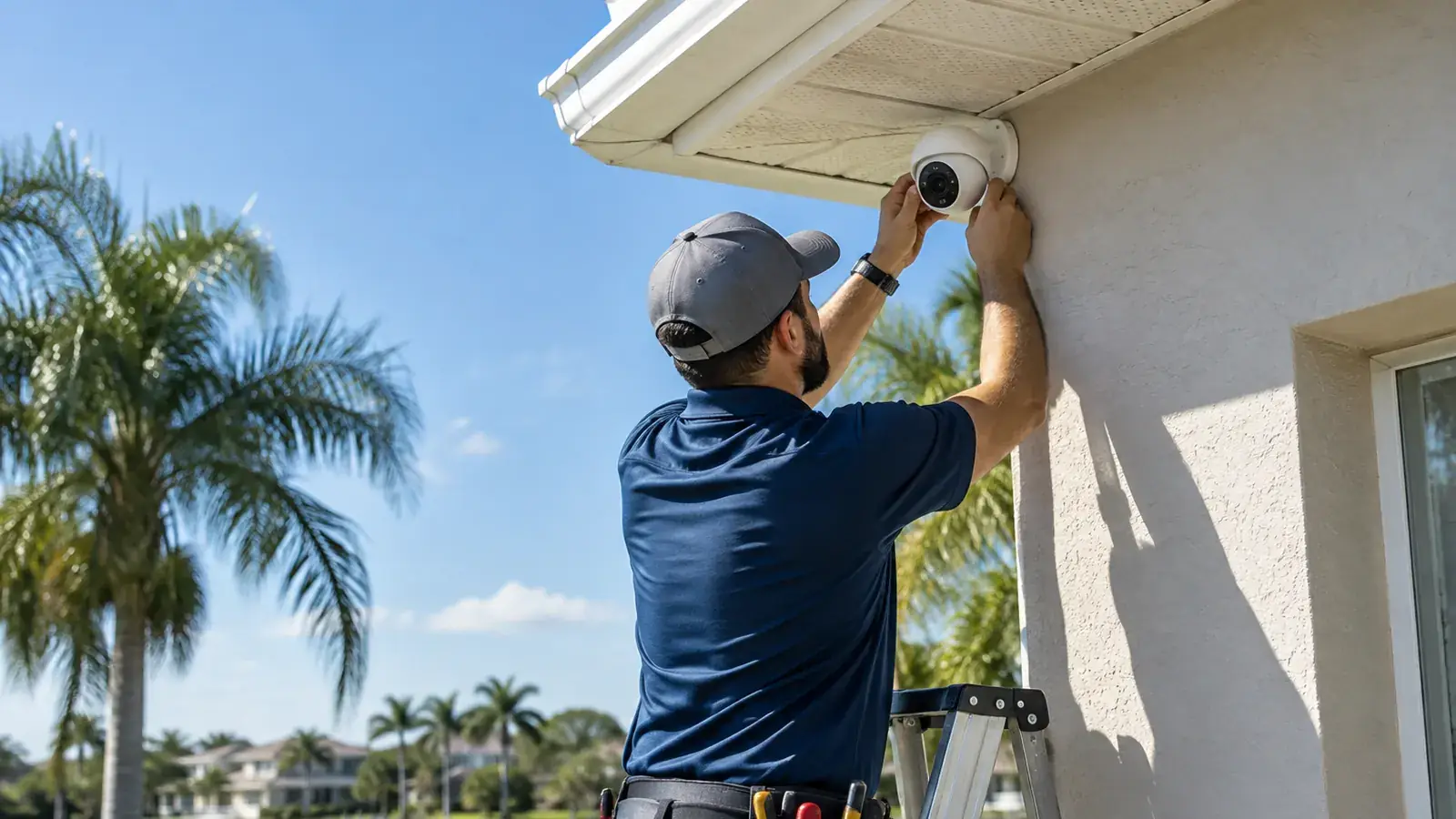
Alarms, cameras and monitoring for your home. Tell us about the job and we'll match you with a local provider who covers your ZIP code.
Good to know
- Ask who owns the equipment and the footage if you cancel monitoring.
- Check contract length and auto-renewal terms.
- Florida alarm contractors are licensed; ask for the license number.
Questions to ask before you hire
- Can I see your Florida license number so I can look it up on myfloridalicense.com?
- Who owns the equipment if I cancel?
- How long is the monitoring contract?
What home security systems usually costs in Tampa Bay
Home security cost has two parts: equipment and installation upfront, and monitoring every month if you want it. Equipment depends on how many door and window sensors, cameras, motion detectors, smoke and water sensors and smart locks you add.
Wired systems in older homes or block construction take more labor than wireless kits. Cameras with local recording and cameras with cloud storage plans cost differently over time.
Read the monitoring contract closely: length, auto-renewal, cancellation fees, and who owns the equipment if you leave. Some companies give equipment discounts in exchange for long contracts.
Permits in Florida
Many Florida cities and counties require an alarm registration or permit for monitored systems and charge for repeated false alarms. Alarm installers in Florida are licensed for low-voltage alarm work. Confirm local rules with your city or sheriff's office.
Permit rules depend on your address: each city permits inside its limits and the county covers unincorporated areas. Ask your provider who pulls the permit and confirm with the local building office before work starts.
Hurricane season planning
Choose equipment with battery backup and cellular communication so it keeps working when power and internet drop in a storm. Add water sensors near water heaters and under sinks. Test the system before hurricane season.
Atlantic hurricane season runs June 1 through November 30. Contractor schedules tighten before and after named storms, so plan non-urgent work early.
Planning around Tampa Bay's wet and dry seasons
Tampa Bay really has two working seasons. The dry season, roughly November through May, brings lower humidity and fewer afternoon storms, so it's usually the easiest time to schedule home security systems, inspections and anything that needs paint, sealant or concrete to cure. The wet season, roughly June through September, brings daily thunderstorms, lightning and heavy humidity that can push outdoor work to the morning and stretch schedules. If your home security systems project isn't urgent, asking for dates early in the dry season usually gives you more choice.
Getting a useful quote
Before a provider visits, jot down what you've noticed, when it started, and any past repairs. Photos help. Know your ZIP code, property type and rough age of the home or building, and whether an HOA, landlord or insurer needs to be involved.
When quotes come in, compare the same scope, materials, warranty and timeline side by side. Our free Compare My Quotes tool can help.
How to hire for home security systems
Ask for the contractor's license number and look it up on the state DBPR site. Check that the name matches the company, the license is active, and the license type fits the job. Some trades are licensed locally by the county instead.
Ask for a current certificate of insurance. Through Tampa Services, license and insurance information is on file for providers; verify current status before hiring.
Get the scope, price, schedule, payment terms and warranty in writing. Be careful with large deposits for work that hasn't started, and with anyone who asks you to sign over insurance benefits.
Compare at least the same scope when you look at prices. The lowest number isn't always the same job.
Frequently asked questions
Do I need professional monitoring?
It's optional. Monitoring dispatches help when you can't respond yourself. Self-monitored systems send alerts to your phone and have no monthly dispatch fee.
Wired or wireless?
Wireless is faster to install and easier to expand. Wired systems avoid sensor batteries. Many installs are a mix.
Will a security system lower my insurance?
Some insurers offer discounts for monitored alarms. Ask your agent.
What happens during a power outage?
Most panels have backup batteries for a limited time. Ask how long yours will run and whether it communicates by cellular.
How it works
- Tell us about the job and your ZIP code.
- We match it with one local provider who covers your area and does this work.
- Your provider contacts you, and you track everything in your portal.