Gutter Installation in Tampa Bay
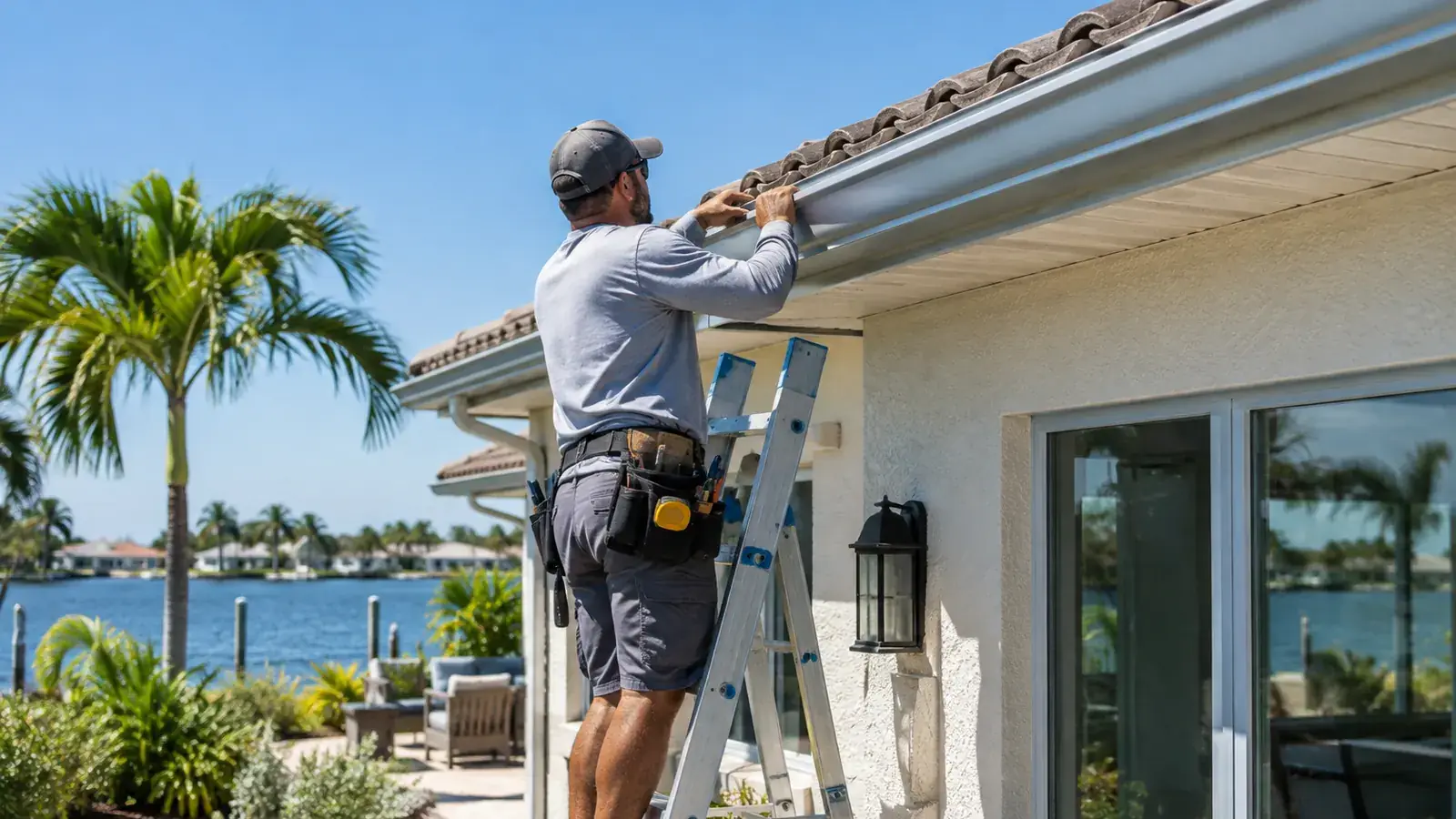
Tampa Bay gets more than its share of hard summer rain, and gutters are what keep that water off your walls, out of your screen enclosure and away from your foundation. Tell us about your home and we'll match you with one local gutter provider who covers your ZIP code.
Signs it's time
- Water pours off the roof edge and splashes mud onto walls or windows
- Stains or peeling paint on the fascia
- Puddles or erosion along the foundation after storms
- Gutters that overflow in heavy rain even when they're clean
- Old sectional gutters with leaking seams every few feet
What affects the scope and price
- Gutter size: 5 inch is common, 6 inch handles more water on big or steep roofs
- Metal: aluminum is standard; copper and steel cost more
- Number of downspouts and where they discharge
- Two-story homes, screen enclosures and roof access
- Fascia repairs needed before new gutters go up
Questions to ask before you hire
- What size gutters and downspouts are you quoting, and why?
- What gauge is the aluminum?
- How are the gutters fastened, and how far apart are the hangers?
- Is old gutter removal and haul-off included?
Florida considerations
- Florida's summer storms can drop a lot of rain in an hour, so downspout size and count matter as much as the gutters themselves.
- Downspouts should carry water several feet away from the slab. Ask about extensions or tie-ins to drainage.
What gutter installation usually costs in Tampa Bay
Gutter installation is priced mostly by linear footage, the number of downspouts, the height of the roofline and the material. Seamless aluminum is the most common choice in Tampa Bay; copper and steel cost more. Larger six-inch gutters move more water during summer downpours but cost more than five-inch.
Extras add up: removing and hauling old gutters, replacing rotten fascia board behind them, gutter guards, and extending downspouts away from the foundation. A two-story or tile-roof home takes more labor and care than a single-story shingle roof.
Ask whether the quote includes hidden hangers, sealed end caps and miters, and a workmanship warranty. These are general cost factors, not a quote.
Permits in Florida
Gutters alone usually don't need a building permit in Tampa Bay, but replacing fascia or soffit as part of the job, or HOA rules on color and style, can change that. Confirm with your city or county and your HOA.
Permit rules depend on your address: each city permits inside its limits and the county covers unincorporated areas. Ask your provider who pulls the permit and confirm with the local building office before work starts.
Hurricane season planning
Book installs in the dry season, roughly November through May, before the summer rains. Before a named storm, clear gutters and make sure downspouts are secure; loose gutters can tear off in high wind and damage the roof edge.
Atlantic hurricane season runs June 1 through November 30. Contractor schedules tighten before and after named storms, so plan non-urgent work early.
Planning around Tampa Bay's wet and dry seasons
Tampa Bay really has two working seasons. The dry season, roughly November through May, brings lower humidity and fewer afternoon storms, so it's usually the easiest time to schedule gutter installation, inspections and anything that needs paint, sealant or concrete to cure. The wet season, roughly June through September, brings daily thunderstorms, lightning and heavy humidity that can push outdoor work to the morning and stretch schedules. If your gutter installation project isn't urgent, asking for dates early in the dry season usually gives you more choice.
Getting a useful quote
Before a provider visits, jot down what you've noticed, when it started, and any past repairs. Photos help. Know your ZIP code, property type and rough age of the home or building, and whether an HOA, landlord or insurer needs to be involved.
When quotes come in, compare the same scope, materials, warranty and timeline side by side. Our free Compare My Quotes tool can help.
How to hire for gutter installation
Ask for the contractor's license number and look it up on the state DBPR site. Check that the name matches the company, the license is active, and the license type fits the job. Some trades are licensed locally by the county instead.
Ask for a current certificate of insurance. Through Tampa Services, license and insurance information is on file for providers; verify current status before hiring.
Get the scope, price, schedule, payment terms and warranty in writing. Be careful with large deposits for work that hasn't started, and with anyone who asks you to sign over insurance benefits.
Compare at least the same scope when you look at prices. The lowest number isn't always the same job.
- Florida DBPR license lookup
- Do You Need Gutters in Florida? A Tampa Bay Guide
- How to Verify a Florida Contractor License
Frequently asked questions
Do I really need gutters in Florida?
Not every home has them, but they protect walls, landscaping and foundations from runoff. Homes with screen enclosures and entryways under a roof edge benefit the most.
Seamless or sectional?
Seamless gutters are formed on site in long runs, so there are fewer joints to leak.
Is this free?
Yes. Sending a request is free for homeowners.
Seamless or sectional gutters?
Seamless gutters are formed on site to fit each run, so there are fewer joints to leak. Sectional gutters are cheaper and DIY-friendly but have more seams to maintain.
What size gutters do I need in Florida?
It depends on roof area, pitch and how much water a valley dumps on one spot. Many Tampa Bay homes with large roofs or heavy runoff do better with six-inch gutters. Ask the installer to explain their sizing.
Are gutter guards worth it?
They can cut down on cleaning, especially under oaks and pines, but no guard is maintenance-free. Ask how the guard handles pine needles and heavy rain.
Do gutters help with foundation and landscaping problems?
Often, yes. Moving roof water several feet away from the house reduces erosion, splash-back staining and standing water near the slab.
How it works
- Tell us about the job and your ZIP code.
- We match it with one local provider who covers your area and does this work.
- Your provider contacts you, and you track everything in your portal.